We have all been in this exact situation. You are traveling for a fun weekend trip. You walk into a hotel lobby with your heavy bags. You are super tired and just want to get the room key. The person at the front desk smiles and says, “Sir, can I please have your ID for check-in?”
Without even thinking about it, you reach into your wallet. You pull out your regular Aadhaar card. The receptionist takes it, walks over to a noisy photocopy machine, prints a copy, and tosses that piece of paper into an open drawer with a hundred other copies.
You get your room key and go to sleep. But have you ever stopped to think about what happens to that piece of paper? Who is looking at it? Where does it go after you check out? That single piece of paper holds the ultimate master key to your digital life. It is actually quite scary when you really think about it!
The Problem: We Share Too Much Information
I think we have a real problem with how we handle our personal IDs today. We use our 12-digit Aadhaar number for absolutely everything. It is linked to your bank account. It is linked to your mobile phone number. It is linked to your tax returns and your permanent account number (PAN). It is even linked to your provident fund!
When you hand over your full, regular card to a random hotel, a security guard at a building, or a local cyber cafe, you are taking a massive risk. You are giving total strangers your exact 12-digit unique number.
The Agitation: The Nightmare of Identity Theft
If that photocopy falls into the wrong hands, it can be a total nightmare. Scammers are getting really smart these days. They can use your full number and your personal details to create fake profiles. They can use it to buy illegal mobile SIM cards in your name. In some extreme cases, financial frauds happen just because someone left a photocopy of their ID at a random shop.
The government actually issued a strong warning about this a while ago. They specifically told the public to stop sharing photocopies of their full Aadhaar cards with random private organizations. But we still need an ID to travel and check into hotels, right? So, what are we supposed to do? We feel totally stuck between protecting our privacy and following the rules.
also Read : – What Does MK Mean in a Text, Why People Use It, and How Tone Changes Everything
The Solution: Enter the Masked Aadhaar Card
This is exactly where the Masked Aadhaar Card comes to the rescue! It is the absolute best solution to this privacy problem, but a surprisingly large number of people do not even know it exists.
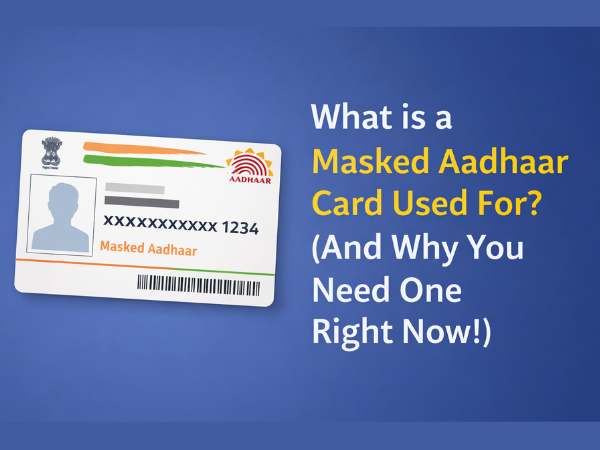
So, what is it? A masked Aadhaar card is an official, totally legal version of your regular ID. It looks almost exactly the same. It has your photograph. It has your name. It has your date of birth, your gender, and your home address. It even has the official QR code printed on it.
There is just one massive difference. The first eight digits of your unique 12-digit number are hidden! They are replaced with cross marks, like this: “XXXX-XXXX-1234”. Only the very last four digits are visible. It proves who you are without giving away the master password to your life.
What is a Masked Aadhaar Card Used For?
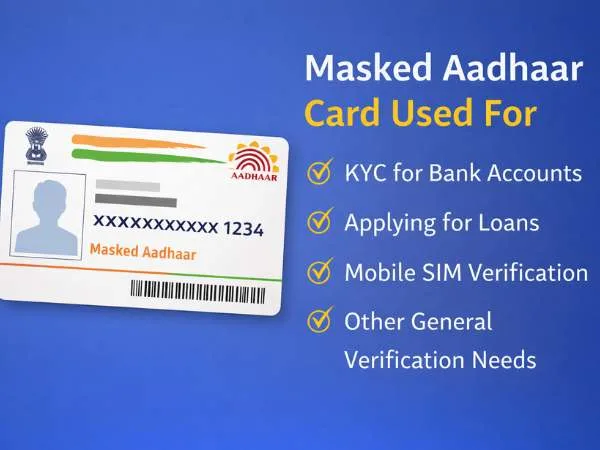
You might be wondering where you can actually use this thing. The short answer is: almost everywhere that is not a bank! Here is a breakdown of exactly what a masked Aadhaar card is used for in our daily lives.
1. Hotel Check-Ins and Bookings This is the number one use case! Hotels only need to verify your identity. They need to match your face to the name on the booking. They absolutely do not need your full 12-digit number to give you a room. You can hand them a printout of your masked card, and they have to accept it. It keeps your data safe while you enjoy your vacation.
2. Airport Entry and Security When you walk up to the airport gate, the security guard asks for your ticket and your ID. Again, they just need to check your name and your photo. They do not need your full number. You can show them a digital copy of your masked card on your phone, and you will walk right through.
3. Building Security and Visitor Logs Have you ever visited a fancy corporate office or a large apartment complex? The security guard at the gate often asks you to leave your ID with them or they write down your full number in a register. That register is completely open for anyone to read! If you use a masked card, they can only write down the last four digits. Your privacy stays intact.
4. Buying Movie Tickets or Entering Venues If you are going to see an A-rated movie or entering a club that requires age verification, they just need to see your date of birth. A masked card works perfectly for this. It proves you are old enough without giving the bouncer your life history.
5. Private Job Interviews When you apply for a job at a private company, HR might ask for ID proof for their initial records. Until you are officially hired and setting up your payroll, a masked version is completely sufficient to prove your identity.
The Exceptions: Where You CANNOT Use It
While the masked version is amazing for daily privacy, it does have some limits. There are a few specific places where the law requires your full, unmasked 12-digit number. You cannot use the hidden version for these tasks:
1. Opening a New Bank Account Banks follow very strict “Know Your Customer” (KYC) rules. They need to report your financial data to the government. To do this, they legally require your full, unmasked number.
2. Claiming Government Subsidies If you are getting benefits directly from the government, like an LPG gas cylinder subsidy, food rations, or a farmer’s pension, they need your full number to transfer the money directly into your bank account.
3. Applying for a Passport The passport verification process is highly secure and involves police background checks. The passport office will demand the full, original 12-digit card.
4. Buying Property or Vehicles When you are registering a massive purchase like a new house, a piece of land, or a car, the government needs your full tax profile and identity. The masked version will not work at the registration office.
How to Actually Get One (It’s Super Easy!)
The best part about this whole thing is that it is completely free, and you can get it right now from your couch. You do not need to visit a government office or stand in a long line. Here is the simple, step-by-step process to download it today.
Step 1: Grab your phone or laptop and go to the official UIDAI website (myaadhaar.uidai.gov.in). Step 2: Look for the button that says “Login” and enter your regular 12-digit Aadhaar number and the captcha code on the screen. Step 3: You will get a One-Time Password (OTP) on your registered mobile phone. Type that in to log in to your dashboard. Step 4: Click on the option that says “Download Aadhaar.” Step 5 (The Most Important Step!): Before you hit the final download button, look closely at the screen. There will be a small checkbox that says, “Do you want a masked Aadhaar?” You absolutely must click that box! If you don’t click it, it will just download your normal, full card. Step 6: Hit download!
How to Open the Secret Password File
When the file downloads to your phone or computer, it will be a PDF file. But it is locked with a secret password! Don’t panic. The password is very simple.
It is always the first four letters of your first name (in ALL CAPS) followed by the year you were born. For example, if your name is Rahul and you were born in 1990, your password would be RAHU1990.
Once you open it, you will see your beautiful new card with those reassuring “XXXX” marks across the front.
Physical Paper vs. Digital Copies
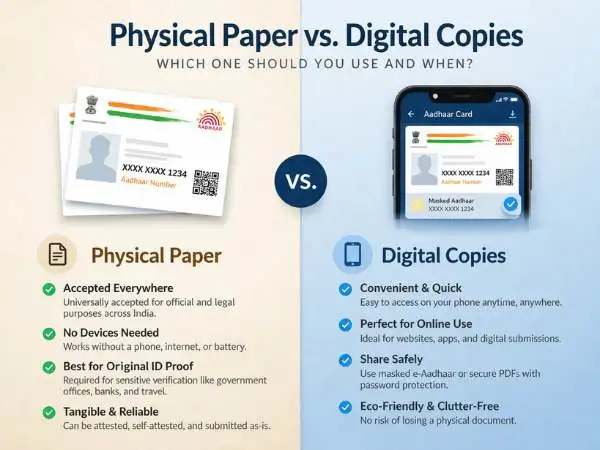
Once you have the PDF, you have a few options. I personally like to keep the PDF saved in a special folder on my phone. Whenever someone asks for my ID, I just open the file and show them my screen.
But it is also a great idea to go to a local print shop. Ask them to print the masked card on a nice, thick piece of plastic or paper, and get it laminated. Keep this physical masked card in your wallet for daily use, and leave your original, full card locked safely in a drawer at home!
But What If They Ask for the Full Number?
This happens sometimes. You hand a hotel clerk your masked card, and they look confused. They might say, “Sir, I need the full number for the system.”
You can politely but firmly tell them no. According to the official rules set by the government and the Unique Identification Authority of India (UIDAI), private entities like hotels, theaters, and private offices are legally bound to accept the masked version for basic identity verification. They do not have the legal right to demand your full 12 digits. Just smile, tell them it is a government-approved secure ID, and they will usually accept it without any more arguments.
The Peace of Mind Factor
At the end of the day, using this hidden card is really about peace of mind. Our digital lives are so complicated right now. We constantly worry about hackers, scams, and data leaks. It feels like our private information is everywhere.
Taking five minutes to download this secure version is a tiny step, but it gives you massive protection. You can travel, check into hotels, and go to job interviews without that nagging worry in the back of your head. You don’t have to stress about where that photocopy is going to end up!
Frequently Asked Questions (FAQ)
I know this topic can be a little confusing if you have never heard of it before. Here are some of the most common questions people ask about this feature!
Does it cost any money to download?
Nope! It is completely free to download from the official government website. You can download it as many times as you want.
Is the QR code on the masked card still valid?
Yes, absolutely! The QR code works perfectly. If a security guard scans it with the official scanner app, it will confirm your identity and show your photo, but it will still protect your core 12-digit number.
Can I use it to buy a new mobile SIM card?
Usually, no. Telecom companies now use a secure digital e-KYC process that requires your fingerprint and your full number.
Can a hacker unmask the PDF to see my numbers?
No, they cannot. The PDF is generated directly by the government servers with the numbers permanently removed from the visual file. It is not just a black box drawn over the text; the data for those first eight digits is literally not there on the document.
Should I throw away my old, full Aadhaar card?
Definitely not! Keep your original, full card in a very safe place at home. You will still need it for banking, taxes, and government forms. Just don’t carry it around in your daily wallet!
Final Thoughts
Look, privacy is a very big deal. We lock our front doors at night. We put PIN codes on our smartphones. We cover the keypad when we use an ATM. We take all these steps to protect ourselves.
We need to start treating our personal ID numbers with the exact same level of respect. Stop handing out your 12-digit master key to every single person who asks for it!
Take ten minutes tonight when you are relaxing on the couch. Go to the website, check that little box, and download your masked copy. Put a printed version in your wallet. The next time you check into a hotel on your vacation, you will feel so much smarter and safer handing over that secure card. Your future self will definitely thank you for it!
Have you already downloaded yours? Let me know in the comments if you have ever had a hotel argue with you about accepting it! Stay safe out there!